What an Emergency Dentist Can Do for a Lost Filling or Crown
A lost filling or crown has a way of turning an ordinary day into a very long one. One bite into toast, a sudden crunch from a hidden seed, or even a piece of sticky candy can leave you with a sharp edge, an exposed tooth, and a wave of worry about what happens next. In many cases, the tooth was doing fine just minutes earlier. Then suddenly it feels vulnerable, sensitive, or painful.
This is exactly the kind of situation an Emergency Dentist handles every day. The problem may look small when the missing piece is sitting in your hand, but the tooth underneath can be delicate, exposed, and at risk for further damage. A quick professional assessment often makes the difference between a straightforward repair and a more complicated treatment later.
People are often surprised to learn that a lost filling or crown does not always mean the same thing. Sometimes the restoration simply reached the end of its life. Sometimes the cement failed. Sometimes decay formed underneath. Sometimes the tooth cracked, and the restoration came off because the underlying structure changed. The treatment depends on which of those is happening, and that is why a proper emergency visit matters.
Why a lost filling or crown deserves prompt attention
The main issue is not the piece that came out. It is the tooth left behind.
When a filling falls out, Emergency Dentist the exposed area may contain dentin, which is softer and more sensitive than enamel. Cold drinks can start to sting. Air can trigger discomfort. Chewing on that side may feel risky. Food also packs easily into the open space, which can irritate the gum and feed bacteria.
When a crown comes off, the concern is often greater. A crowned tooth has usually already lost a fair amount of natural structure. That is why it needed the crown in the first place. Without that protective shell, the remaining tooth can be weak, sharp, or prone to fracture. If the crown was covering a tooth that had root canal treatment, pain may be less dramatic, but the tooth is still vulnerable to cracking.
There is also the timing problem. Teeth rarely choose a convenient moment to fail. Patients commonly lose crowns before a trip, over a holiday weekend, or late at night after dinner. In practice, those are the cases that show why emergency dental care exists. The goal is not merely to stop discomfort. It is to protect the tooth while deciding the safest, most durable fix.
What usually causes a filling or crown to come out
Restorations are durable, but they are not permanent. Fillings can loosen over time as biting forces, temperature changes, and tiny movements wear down the bond between the material and the tooth. Crowns can come off if the cement dissolves gradually, if decay develops at the margin, or if the tooth underneath changes shape because a piece has broken away.
I have seen very ordinary habits contribute to these emergencies. Patients who clench at night often place enormous force on restorations without realizing it. Chewing ice is another common culprit. So is using teeth to open packaging, which dentists ask people not to do for good reason. Sticky foods can be surprisingly destructive as well. Caramel and chewing gum have pulled off many otherwise serviceable crowns.
Age of the restoration matters too. A filling that has been in place for ten or fifteen years has done real work. It may fail simply because materials fatigue and edges wear. That does not always mean anyone did something wrong. It means the restoration had a lifespan, and it ended.
Sometimes the lost crown is actually a clue that a larger issue has been developing quietly. Decay can form under the edge of a crown without much warning. The crown may then come off attached to a bit of decayed tooth or with a smell patients notice immediately. In those cases, recementing it is often not enough.
What an Emergency Dentist looks for first
At the emergency appointment, the first job is triage. How much pain are you in, how exposed is the tooth, and is there a sign of fracture or infection? If the answer points to a straightforward recementation or replacement, the visit may be shorter than patients expect. If the tooth has cracked below the gumline, if the nerve is inflamed, or if decay is extensive, the treatment plan changes.
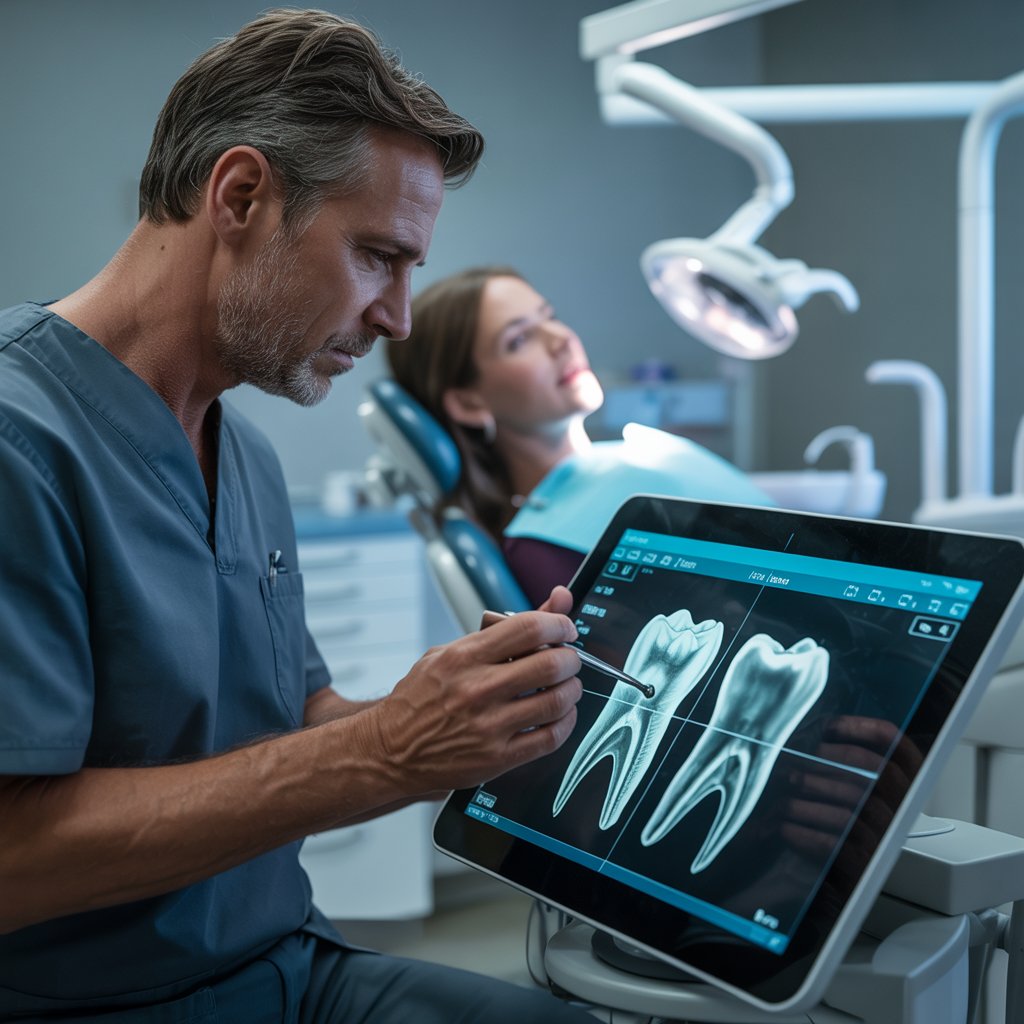
The examination usually includes a close visual inspection, gentle probing around the margins, and often an X-ray. That image matters because what looks like a simple lost crown from above can hide decay under the gumline or a crack in the root. Dentists also check your bite. A crown that keeps coming loose may be taking excessive force in one spot, and unless that is adjusted, the same problem can repeat.
The condition of the crown itself matters. If the crown is intact, cleanable, and still fits the tooth properly, it may be possible to recement it. If it is distorted, cracked, or no longer fits because the tooth changed underneath, a new crown is usually the better answer. The same principle applies to lost fillings. A small filling that came out from a stable tooth may be replaced promptly. A larger one may reveal that the tooth needs a crown instead.
What can often be done at the same visit
One of the advantages of seeing an Emergency Dentist is that the appointment is designed to solve immediate problems, not just diagnose them and send you home uncomfortable. Depending on the findings, several practical treatments may happen that day.
- Recementing the existing crown if it is intact and the tooth underneath is sound
- Placing a new filling if the missing restoration was small and the tooth remains strong
- Smoothing sharp tooth edges and placing a protective temporary material
- Adjusting the bite if excessive pressure likely contributed to the failure
- Prescribing further treatment, such as root canal therapy or a new crown, when the tooth needs more than a quick fix
That range is important because patients often assume emergency care is limited to pain medication or temporary advice. In reality, many emergency dental visits are highly productive. A stable crown can sometimes be cleaned and recemented in one appointment. A lost composite filling in a non-complex area can often be replaced then and there. Even when definitive treatment requires a second visit, the exposed tooth can usually be protected right away.
Recementing a crown is not always as simple as it sounds
Patients often ask whether the dentist can just glue the crown back on. Sometimes yes, often no, and the difference depends on details that are hard to judge at home.
For a crown to be recemented successfully, it needs to fit precisely. If the tooth underneath has decayed, fractured, or lost a piece of structure, the old crown may no longer seat properly. If it rocks, sits high, or leaves an opening at the margin, bacteria can get in, and the crown may fail again quickly. Recementing an ill-fitting crown just to get through the week can occasionally be reasonable as a temporary measure, but not as a long-term plan.
There is also the issue of contamination. Crowns carried in a pocket, rinsed casually, or handled with household glue are much harder to reuse safely. Dentists need a clean bonding surface and enough healthy tooth structure for retention. Household adhesives are especially problematic. They are not biocompatible for this use, they interfere with dental materials, and they make proper reattachment more difficult.
A well-fitting crown that simply lost cement, on the other hand, is often a satisfying emergency repair. Once the tooth is cleaned, checked, and confirmed healthy enough, recementation can restore comfort and function quickly.
When a lost filling points to a bigger structural problem
Fillings fail for many reasons, but size changes the equation. A very small filling that pops out may leave enough healthy tooth behind for a simple replacement. A very large filling is another story. If a significant portion of the biting surface is unsupported, repeatedly replacing the filling may be false economy. The tooth flexes under pressure, the filling loosens again, and each cycle risks a crack.
This is where judgment matters. An experienced clinician does not look only at the hole left behind. They look at how much natural tooth remains, where the forces land when you bite, whether cracks are visible, and whether the tooth has a history of repeated repairs. In some cases, the emergency visit becomes the moment when the treatment plan shifts from “another filling” to “this tooth really needs a crown.”
That can be disappointing to hear when you came in expecting a quick patch. But it is often the more conservative choice in the long run, because it protects the remaining tooth instead of asking a weak structure to carry on unprotected.
Temporary protection can save a tooth from getting worse
Not every emergency visit ends with a final restoration. Sometimes the best care is temporary, deliberate, and protective.
If the tooth is too sensitive to restore immediately, if gum tissue is inflamed, or if a new crown needs to be fabricated, the dentist may place a temporary filling or temporary crown material. This is not a second-rate solution. It serves a clear purpose. It seals exposed dentin, reduces sensitivity, lowers the risk of contamination, and gives the tooth a chance to remain stable until definitive treatment.
Temporary measures are especially valuable before weekends or travel. A patient who loses a crown on Friday afternoon may not be able to complete a lab-made crown the same day, but they can often leave with the tooth covered and protected, able to eat carefully and sleep without that constant shock of sensitivity.
There is a practical point here that patients appreciate once they experience it. A good temporary restoration buys time safely. A bad DIY fix often creates a mess that has to be undone.
What you should do before you can get to the office
The period between losing the restoration and sitting in the dental chair matters more than most people think. A few simple steps reduce the chance of further damage.
- Keep the crown if you can find it, and store it in a clean container
- Rinse your mouth gently with warm water to clear debris
- Avoid chewing on the affected side, especially hard or sticky foods
- Use over-the-counter pain relief as directed if you are sore
- Call an Emergency Dentist as soon as possible, especially if the tooth is painful or sharp
If a crown comes off and slips back over the tooth easily, some patients ask whether they should place it back themselves. The cautious answer is that you should avoid forcing anything into position. If it does not seat naturally and comfortably, pressure can crack the tooth or trap debris under the crown. Over-the-counter temporary dental cement from a pharmacy may sometimes help in a true pinch, but it should be treated as exactly that, a short-term stopgap until professional care. It is not a substitute for an examination.
Pain level does not always reflect urgency
One of the most misleading parts of this problem is that some patients feel intense pain right away, while others feel almost nothing. Neither response tells the whole story.
A front tooth with a lost filling may be very sensitive Emergency Dentist because the exposed area reacts to air and temperature. A back tooth that lost a crown after root canal treatment may feel strangely normal, even though it is at real risk of fracturing. Conversely, a tooth with mild soreness may simply need recementation, while another with severe throbbing may have nerve inflammation that requires more involved treatment.
This is why delaying care based on pain alone is risky. The absence of pain does not guarantee that the tooth is safe to leave alone. The real question is what condition the remaining tooth structure is in.
Children, older adults, and patients with dental anxiety need a slightly different approach
Emergency care is never one-size-fits-all. A child who loses a filling may be frightened more by the sensation than by the actual damage. The appointment often needs a calm pace, clear explanation, and a treatment choice that balances speed with durability. A stainless steel crown on a primary tooth, for example, may be more practical than repeatedly patching a large failing filling.
Older adults present a different set of challenges. Teeth with long dental histories often have multiple restorations, wear, gum recession, and medications that contribute to dry mouth. Dry mouth raises cavity risk, especially around crown margins. In these patients, a lost crown may be the visible result of a broader pattern that needs attention beyond the immediate emergency.
For patients with dental anxiety, lost restorations are emotionally difficult because they feel sudden and out of control. A good Emergency Dentist recognizes that and explains the plan in manageable steps. That communication matters. People cope better when they know whether the goal today is definitive repair, temporary protection, or diagnosis plus pain relief.
When the answer is a new crown, not a repair
There are times when reusing the old crown is simply not good dentistry. If decay has hollowed out the tooth, if the crown margin no longer adapts properly, or if the crown itself is cracked, replacement is usually the safer path. That may involve removing compromised tooth structure, rebuilding the tooth with a core material, taking a scan or impression, and placing a temporary crown until the new one is ready.
Some offices can make crowns the same day with in-house technology. Others use a dental laboratory and need a second appointment. Neither approach is automatically better in every case. What matters is the condition of the tooth, the quality of the preparation, the fit, and the bite. A well-made crown should feel stable, cleanable, and comfortable when you chew.
Patients understandably ask about cost at this stage. A recementation is usually less expensive than a new crown. But if the old crown no longer seals the tooth properly, choosing the cheaper option can lead to repeat emergencies or even tooth loss. This is where a candid conversation about durability, prognosis, and budget is more useful than a rushed promise to “make it work.”
Preventing the next emergency
After the immediate crisis is handled, prevention becomes the practical next step. Restorations tend to fail where stress, decay, and time overlap. Small changes can reduce the odds of a repeat episode. If you grind your teeth, a night guard may protect crowns and fillings from repeated overload. If dry mouth is part of the picture, fluoride products and hydration strategies can lower the risk of recurrent decay around margins. If one side of your bite is carrying too much force, a simple adjustment can sometimes extend the life of a restoration significantly.
Regular exams matter here, not as a slogan but as a mechanical reality. Dentists can often spot a loose margin, a small cavity forming around a crown, or a crack line before the restoration fails dramatically at dinner. That early window gives you options. Once the crown is in your hand, the choices are usually narrower.
The real value of emergency dental care in this situation
What people need most in this moment is clarity. Is the tooth salvageable, can the crown be reused, is the pain likely to worsen, and what has to happen now versus later? An Emergency Dentist provides that judgment quickly, with the tools to protect the tooth immediately.
For a lost filling or crown, the best-case scenario can be very simple. The restoration is intact, the tooth is healthy, and the fix is done the same day. The more complicated cases still benefit from fast care, because the exposed tooth is stabilized, the diagnosis becomes clear, and the next steps are planned before the problem snowballs.
That is the part patients often remember after the stress fades. The emergency visit is not only about reacting to something that went wrong. It is about preserving options, reducing pain, and giving the tooth its best chance of staying functional for years to come.
Vitality Dental
1220 Coit Rd # 106, Plano, TX 75075, United States
+1 972-645-4100
FAQ About Emergency Dentist
What counts as a dental emergency?
A knocked-out tooth, significant mouth injury, severe tooth pain, or painful swelling warrants prompt evaluation. Call your dentist and describe your symptoms so the office can advise you on how urgently you need care.
What should I do if I knock out a permanent tooth?
Call a dentist immediately. Handle the tooth by the crown, avoid touching the root, and keep it moist. If you cannot put it back into the socket easily, transport it in milk or a tooth-preservation solution. Bring it with you to the appointment.
Should I go to the emergency room for a dental emergency?
Seek emergency medical care right away if you have trouble breathing or swallowing, uncontrolled bleeding, or a serious facial injury. For an isolated tooth injury or toothache without those symptoms, call a dentist promptly for guidance.
Ends · RIVERUSSJ234